Muscle Rigidity in Parkinson’s Disease: What it is and how it is managed
- PD Pharos
- Jan 16
- 1 min read


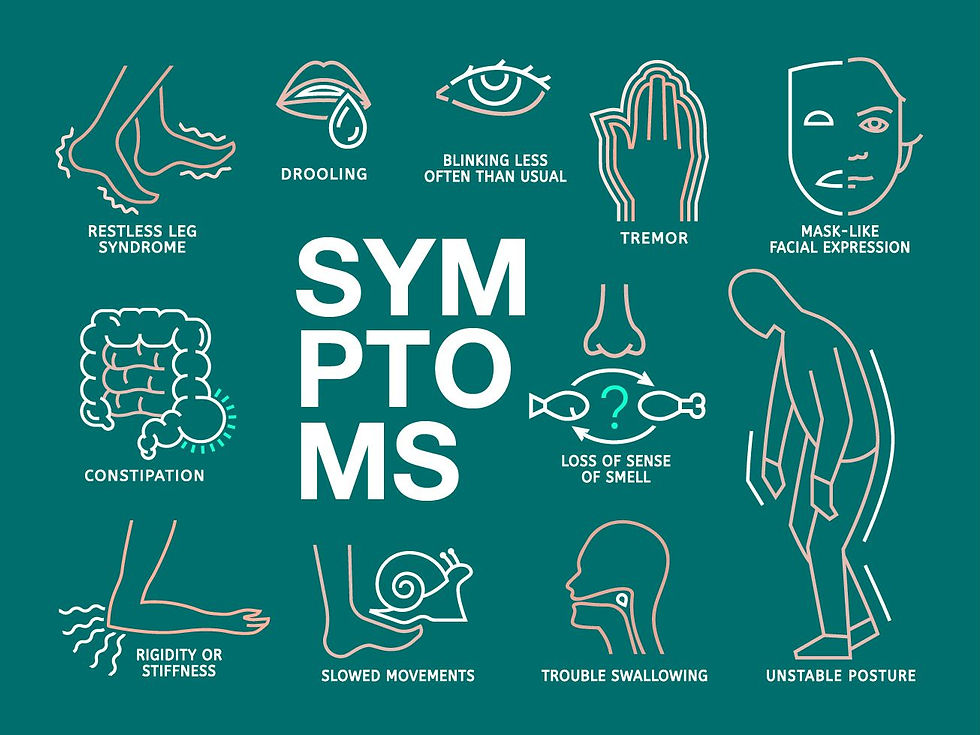
Muscle rigidity in Parkinson’s disease is one of the most common — and often misunderstood — symptoms. For many people, it does not initially feel like a “neurological symptom,” but rather like simple stiffness, pain, or tightness — something easily attributed to fatigue, stress, or orthopedic issues.
In reality, muscle rigidity in Parkinson’s has specific characteristics. It can significantly affect movement and daily life and is often a key element in making the diagnosis.
In the article below — originally published by the Davis Phinney Foundation and translated into Greek with the Foundation’s permission — you will find a clear and practical explanation of:
what muscle rigidity is in Parkinson’s disease
how it differs from other types of muscle pain or stiffness
how it affects movement and everyday functioning
what the main management options are
👉 Read the full article on muscle rigidity in Parkinson’s disease here.

Comments